
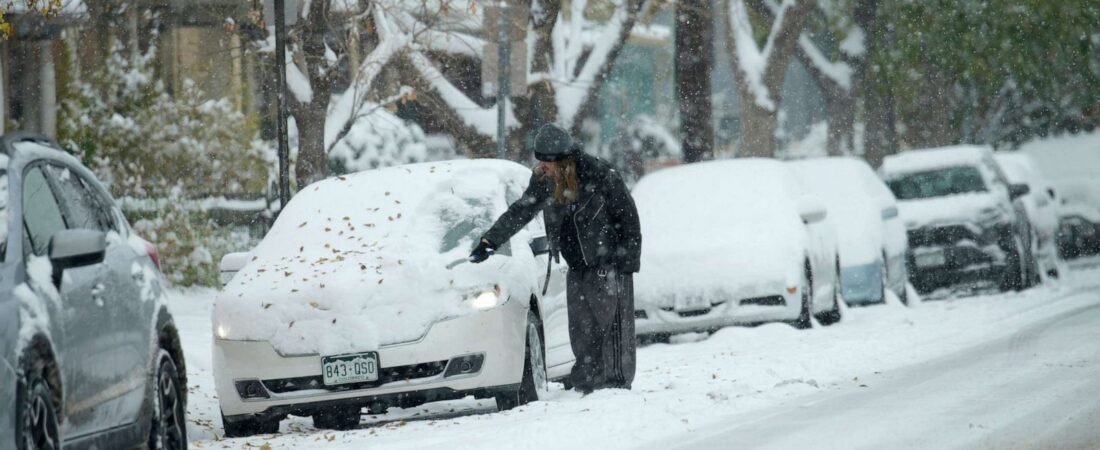
The United States is heading into a potentially unusual winter as El Niño strengthens, with the climate pattern expected to peak during the winter months and possibly become one of the strongest El Niño events on record.
Forecasts indicate that the current El Niño could develop into a “Super El Niño” by October, with nearly a 70% chance of becoming the strongest El Niño on record by the end of the year.
The South Could Be Wetter and Cooler
El Niño typically pushes the jet stream farther south, increasing the chances of storms and wetter weather across large parts of the southern United States, according to the National Oceanic and Atmospheric Administration (NOAA).
Meanwhile, northern areas tend to experience warmer and drier conditions than usual, which could mean less snowfall across the Northeast during winter, particularly during strong El Niño events.
Parts of the Southeast and the southern Plains could also see conditions more favorable for snow, freezing rain and sleet, depending on temperatures in those areas.
Thunderstorm activity could also be affected. Florida is typically at greater risk of severe thunderstorms during El Niño winters, while activity tends to decrease in other parts of the Gulf Coast, according to experts.
Early Outlook for Winter 2026-2027
The NOAA Climate Prediction Center’s outlook for December 2026 through February 2027 shows several patterns typically associated with El Niño.
The forecast points to a higher likelihood of above-average temperatures across much of the northern United States, stretching from the Pacific Northwest to the Midwest. More than half of the contiguous U.S. could experience warmer-than-average conditions.
Rainfall is also expected to be above normal across broad areas of the southern U.S., including Southern California, the southern states and the East Coast, with the strongest confidence focused on the Southeast.
Northern areas, meanwhile, are expected to be drier than normal, which could reduce snowfall chances.
Despite the expected strength of El Niño, NOAA notes that an unusually strong event does not necessarily mean record-breaking weather impacts. Instead, it increases the likelihood that typical El Niño weather patterns will develop.
Climate change could also play a role. An analysis by Climate Central found that warming temperatures have contributed to declining snowfall, with annual snowfall decreasing across nearly two-thirds of the United States since 1970.